Does your chin pucker into little craters when you speak or smile, almost like an orange peel? That pebbled texture, often called mentalis straining or chin dimpling, is one of the most satisfying areas to smooth with targeted Botox injections when done by skilled hands.
I have treated hundreds of chins across a wide range of ages, skin types, and facial structures. The chin sits at a busy crossroads in facial animation, and it ages in its own stubborn way. When the mentalis muscle overworks, it can pull the overlying skin into dimples, create a pebble-like surface, and even tug the lower lip downward. Add volume loss in the lower face and a tighter chin pad, and you get a more pronounced orange-peel effect. Botox cosmetic, placed accurately in micro-doses, relaxes this muscle, softens texture, and restores a calmer, more refined chin surface without freezing expression.
Why dimpling happens in the first place
The mentalis is a small, central chin muscle that lifts and protrudes the lower lip. With genetics, habitual movement, or compensation for other muscles, it can become hyperactive. Think of it as a fist that tightens whenever you talk, chew, concentrate, or clench your jaw. The skin over that constantly flexing muscle puckers, especially if your skin is fine or your subcutaneous fat is thin. Over years, this becomes etched, and what starts as dynamic dimpling when you move can turn into static texture at rest.
There are other contributors. Dental occlusion issues, heavy jaw clenching, or masseter overactivity can make the chin work harder. Bone remodeling and fat pad changes with age can expose the muscle’s pull. Even filler placed poorly in the chin or mental crease can worsen cobblestoning by adding weight where the muscle already strains. Understanding the mechanical cause guides a clean plan: relax what is overworking, then restore shape or support if needed.
What chin Botox does, and what it does not do
Botulinum toxin type A is a neuromodulator. In tiny, localized doses, it reduces the mentalis muscle’s ability to contract. That means fewer ripples and a smoother, more even surface. It does not fill lines, lift sagging skin, or reshape bone. If you have a deep mental crease or significant retrusion of the chin, your provider may recommend a combination approach: Botox to stop the dimpling, and a strategic filler or biostimulator to ease the crease or add projection.
A good chin treatment aims for a natural effect. You should still be able to move your lower lip, purse gently, and speak normally. The goal is to eliminate the exaggerated puckering, not to immobilize the lower face. Over-treating the mentalis can give a heavy or “slack” look and may interfere with certain lip movements. Under-treating can leave persistent ripples. Precision matters.
How a thoughtful consultation shapes the outcome
I start chin evaluations by watching patients talk. I ask them to say certain words that activate the mentalis, to smile, and to drink from a straw. I look at rest and in motion, from multiple angles, in natural and overhead light. If the chin pebbles visibly when they animate, mentalis hyperactivity is on the table. If the lower lip pulls downward or the chin dimples even at rest, the muscle is likely working overtime.
We also review dental history, TMJ symptoms, and jaw clenching. If the masseter is significantly overactive, it can change the balance across the lower face. Treating the masseter for jaw clenching or contouring can indirectly reduce chin strain. I map the mental crease and palpate the mentalis to understand thickness and dominant bands. Photographs capture the before, and they set a baseline for later botox before and after comparison.
Patients frequently ask about botox cost, botox safety, and down time. For chin Botox, the dose is typically low compared to upper-face areas like the botox forehead or botox for frown lines. That keeps both cost and risk in a favorable range for many. Most people return to work immediately, with simple botox aftercare instructions: no heavy pressure on the area for a few hours, avoid strenuous exercise the day of treatment, and keep the face clean.
The technique that keeps results natural
The mentalis tends to have two bellies along the midline, though anatomy varies. I plan a few small injection points, usually central and slightly lateral on each side, at a depth that engages the muscle but spares more superficial tissue. I prefer micro-doses split across points instead of a single bolus. This approach reduces the chance of diffusion into nearby muscles that control lip movement.
The typical dose range in my practice is roughly 6 to 12 units of Botox for women and 8 to 16 units for men, adjusted for muscle thickness and strength. Smaller faces with lighter animation do well at the low end, while stronger chins or prominent cobblestoning may warrant more. New patients get conservative dosing first, with a scheduled botox touch up at two weeks if needed. That staged approach controls risk and refines the outcome.
Every injector has a map they trust. What matters is not a fixed pattern, but accurate placement, conservative initial dosing, and respect for the functional role of the mentalis. If you see lip incompetence or drooling in botox before and after photos online, that is often a sign of over-treatment, misplacement, or both.
How fast results appear and how long they last
Most people feel the chin soften in 3 to 5 days. Peak smoothing typically appears around day 10 to 14. The skin looks calmer and the pebbled look recedes. Fine etch marks may also soften over the next few weeks as the muscle stops creasing them.
Durability varies. Expect 3 to 4 months of effect for first-time patients. With consistent botox maintenance over several cycles, many stretch to 4 to 6 months as the muscle “unlearns” some of its overactivity. Metabolism, dose, and facial animation patterns all influence longevity. If you are a frequent smiler, public speaker, or jaw clencher, you may need earlier botox refill appointments.
What it feels like to get chin Botox
Most describe it as a few quick pinches with minimal discomfort. I use a fine needle and apply mild vibration or ice to distract. The botox procedure itself takes under five minutes once the plan is set. You might see a few tiny blebs for 10 to 20 minutes where fluid sits before dispersing. Makeup can go on after a couple of hours if the skin looks calm.
Bruising is uncommon but not impossible, especially in patients taking fish oil, aspirin, or other blood thinners. If you have a wedding or photos, schedule your botox appointment at least two weeks prior to allow for a touch up and to ensure bruises, if any, have cleared.
Risks, side effects, and how to minimize them
When performed by experienced injectors, chin Botox is considered safe with a low complication rate. The most common side effects are temporary: mild tenderness, pinpoint bruising, or a feeling of heaviness as the muscle relaxes. If Botox diffuses to nearby muscles or dosing is too high, you could experience lower lip weakness, difficulty with certain p sounds or whistling, or asymmetry when you smile. These issues usually resolve as the product wears off, but you want to avoid them in the first place.
To reduce risk, I keep total dose appropriate to muscle mass, stay superficial enough to target the mentalis without spilling into depressor labii or orbicularis oris, and avoid injecting too close to the vermillion border. I also counsel patients to skip massages, aggressive facials, or face-planting naps for the rest of the day. In the rare event of asymmetry, a tiny adjustment on the other side can often restore balance.
As with all neurotoxin treatments, there is a small risk of headache, allergic reaction, or unintended spread, though these are rare. Patients who are pregnant, breastfeeding, or with certain neuromuscular disorders should avoid cosmetic botox therapy. A proper botox consultation should cover medical history and medications so your provider can identify contraindications.
When Botox alone is not enough
Chin dimpling often rides along with a deep mental crease, retruded chin, or early marionette lines. If you only relax the mentalis without addressing structural issues, you may see a partial improvement. Combining modalities can be elegant and efficient when planned correctly.
A hyaluronic acid filler placed in the mental crease, for example, can soften the fold that persists even after the muscle relaxes. For a receding chin, carefully layered filler can add projection and support the soft tissue, reducing the accordion effect that contributes to pebbled texture. Some patients benefit from micro botox to refine pores on the chin surface if oiliness and enlarged pores amplify the roughness. The sequence matters: first break the overactivity with Botox, then fill or contour what remains if appropriate.
Chin Botox in the context of the whole lower face
Faces are ecosystems, not isolated parts. The lower face has a push-pull of muscles: depressors of the mouth corners, platysma bands tugging down the jawline and neck, and the mentalis lifting from below. If the corners of your mouth pull down, a few units near the depressor anguli oris can help soften the frown while the chin relaxes. If platysma bands dominate, botox platysma bands may sharpen the jawline and reduce necklace-like cords, which complements a smoother chin. If you clench your jaw, botox masseter treatment can reduce bulk and soften a square jaw while also easing strain that cascades to the chin.
All of this sits alongside skin quality. Texture improves more when oiliness and pore size are handled. Some use micro-dosed neurotoxin for oily skin or large pores in select areas. Others prefer resurfacing or medical-grade skincare. If acne is active on the chin, address it first or in parallel to avoid treating over inflamed skin. Your injector should help you prioritize steps so you do not stack procedures that compete with each other’s recovery windows.
Expectations, photos, and the mirror test
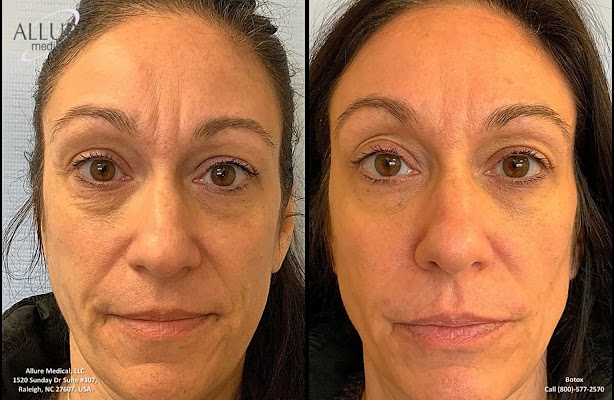
Before-and-after photos for chin Botox usually show a subtle shift that feels big to the patient. The chin at rest looks smoother, the lower face reads calmer, and close-up texture loses its pebbled quality. During speech, the orange-peel effect becomes far less noticeable. In good lighting, makeup applies more evenly because the surface turbulence is reduced.
There is a simple mirror test I use: ask the patient to say “puppy” and “purple” in front of the mirror, then purse as if sipping through a straw. The words recruit the mentalis. If the skin still craters, we either need a touch up or additional support in the crease. If the surface stays smooth, we are there.
Cost, frequency, and value over time
Botox cost varies by market, injector experience, and dose. The chin’s typical dosage keeps it on the lower end of pricing compared to full upper-face treatments like botox for crow’s feet, botox for frown lines, or botox between eyebrows. Many practices price per unit or per area. Expect regional spreads, but the total for chin-only treatment commonly lands at a relatively modest fee compared to multi-area plans.
Patients often ask whether the investment makes a visible difference. For those truly bothered by orange-peel texture, the answer is yes, provided you are a good candidate. The mentalis is a small muscle, yet it narrates a lot of expression. Quieting it slightly smooths the story your skin tells. Over a year, two to three sessions can keep the effect stable. As muscles adapt, some can extend visits with preventative botox maintenance that uses smaller doses, which may reduce annual cost.
The patient profiles that benefit most
Raleigh NC botox clinicsThree broad profiles tend to love chin Botox. First, younger patients in their 20s to 30s with genetically active mentalis and fine skin see quick texture wins. Second, midlife patients who have developed a deeper mental crease and newly obvious cobblestoning appreciate a calmer surface and softer lines when paired with small, targeted filler. Third, patients with jaw clenching or those pursuing botox for jawline refinement through masseter reduction find that treating the chin completes the lower-face contour, making the whole area look more harmonious.
There are also caution zones. Very thin lower lips or prior surgery in the area can change anatomy. Patients who perform instruments or activities that rely on lip strength may need lighter dosing. Those with significant skin laxity may need energy-based tightening or surgical options instead of, or in addition to, neuromodulators. Honest counseling avoids disappointment.
At-home prep and aftercare that actually matter
Small habits make a difference. If you bruise easily, pausing nonessential blood thinners like fish oil or high-dose vitamin E for a week can reduce bruising risk, but only with your prescribing physician’s approval. Arrive at your botox appointment without heavy makeup on the chin. After treatment, keep hands off, skip saunas and hot yoga for the day, and avoid face-down massages for 24 hours. Sleep on your back the first night if you can.
If a small bruise appears, a dab of arnica or a color corrector covers it. If lips feel slightly lazier for whistling or sipping through a tight straw, give it a few days to settle. Most patients return to normal routines immediately with no downtime. Call your provider if you note unusual asymmetry or difficulty with speech that persists beyond the first week.
Where Botox fits among alternatives
Some reach for botox alternatives like topical “botox cream” or “botox serum,” but these products do not replicate the muscle-relaxing effect of injected neurotoxin. They can smooth the skin’s surface temporarily through hydration or peptide signaling, yet they will not quiet a hyperactive mentalis. Skin resurfacing can help etched lines and texture. Microneedling and light peels add polish. Fillers address volume and contour. Each has a role, and the right order matters.
Among neurotoxins, subtle differences exist. Patients sometimes ask about botox vs Dysport, botox near me botox vs Xeomin, or botox vs Jeuveau. In practice, all are botulinum toxin type A and can work well in the chin. Dysport can have a slightly quicker onset in some, while Xeomin has no accessory proteins and is favored by those seeking a “clean” formulation. Jeuveau performs comparably to Botox in many lower-face use cases. I pick based on the patient’s prior experience, onset preferences, and how their tissue responds. Consistency tends to be more important than brand switching.
How chin Botox interacts with other popular areas
The chin is one piece of a lower-face puzzle. Treating it can be part of a botox full face strategy that also includes an eyebrow lift for balance, subtle smoothing around the eyes if crow’s feet or bunny lines distract, or a lip flip to reveal a touch more pink without filler. If the concern is gummy smile, a few units near the levator labii can lower the upper lip’s rise, which, paired with a relaxed chin, keeps the smile harmonious. For those pursuing botox face contouring, especially men who want crisp angles, coordinating chin, masseter, and platysma treatments can yield a more defined jawline.
Remember that each additional area increases total dose and cost. I prefer a phased plan: address the primary concern, evaluate botox results at two weeks, then decide what else will provide the highest aesthetic return. This keeps treatments purposeful rather than scattershot.
A quick reality check on natural results
Natural results come from restraint and respect for function. You want a smoother chin, not a mute lower face. Two practical signs tell me we hit the target: the chin looks untroubled during conversation, and the lower lip retains its expressive range. When patients say their makeup sits better and that they no longer catch their chin texture in photos, that is success.
The opposite is easy to recognize: a flattened lower face, difficulty with certain consonants, or an odd smile arc. Those signs tell me the dose or placement was off. If that happens, you wait for partial wear-off, then recalibrate. Everyone’s baseline anatomy is a little different. After one or two cycles, we usually find the patient’s ideal pattern and maintenance interval.
Frequently asked, plainly answered
- How soon will I see botox results in the chin? You will notice softening within 3 to 5 days, with peak smoothing at 10 to 14 days. How long does it last? On average 3 to 4 months at first. With steady maintenance, many reach 4 to 6 months. Will it affect how I talk or smile? Not when dosed and placed well. Mild lip weakness can happen if overdone, which is why conservative dosing matters. Is it painful? Brief pinches. Most patients rate it mild. The whole botox procedure takes minutes. Can I combine it with other treatments? Yes. Many pair it with filler for the mental crease, botox for jaw clenching in the masseter, or subtle lip treatments like a botox lip flip. Sequence and timing should be planned by your provider.
A short case vignette from practice
A 36-year-old marketing executive came in with a specific complaint: her chin looked rough and pebbled on video calls when she spoke. At rest, mild dimpling; in motion, marked orange-peel texture. Her mentalis was strong, and she also clenched her jaw during stressful work cycles.
We treated the chin with 10 units of Botox split into four micro-points, and the masseter with a conservative 18 units per side. Two weeks later, the chin was smooth in motion and at rest, and her jaw felt less tense. At six weeks, a faint mental crease remained, which we softened with 0.3 mL of a soft hyaluronic acid filler using a microcannula. She returned at five months for a botox touch up with slightly fewer units. The workload on her chin dropped, and so did the video-call anxiety.
The bottom line for patients considering chin Botox
If the orange-peel look bothers you when you talk, smile, or apply makeup, the odds are good that your mentalis is overworking. Targeted botox injections can calm that muscle, smooth dimpling, and improve texture with a light-touch, natural result. The effect builds within two weeks, lasts a few months, and, when maintained, often stretches longer between visits. For deeper creases or structural concerns, pairing with a small amount of filler or complementary lower-face treatments makes the result more complete.
Look for a provider who studies your face in motion, discusses dose strategy, and welcomes a planned follow-up rather than promising a one-and-done. That approach, paired with realistic expectations and simple aftercare, turns a minor procedure into a meaningful change in how your lower face reads, both in person and on camera.
If a smoother, calmer chin would help your features look more polished, a careful chin Botox plan is the most direct route. It is a small treatment with an outsized impact on expression, balance, and the quiet confidence of knowing the camera can come closer without broadcasting texture you would rather not see.